Some memories don’t come with a date attached. You just remember the feeling; the place, the light, who was there. I wanted a journal that could hold onto both: the quick daily entry and the memory you’re only now getting around to writing down, years later.
Every journaling app I tried either buried me in features I didn’t need, or locked everything into someone else’s cloud. I just wanted to write, read back, and occasionally see where in the world a memory happened. So I built Runa.
I’ve been using it myself for a while now, on and off, before deciding it was ready to share.
What it actually does
Runa keeps things simple on purpose: write, read, and remember.
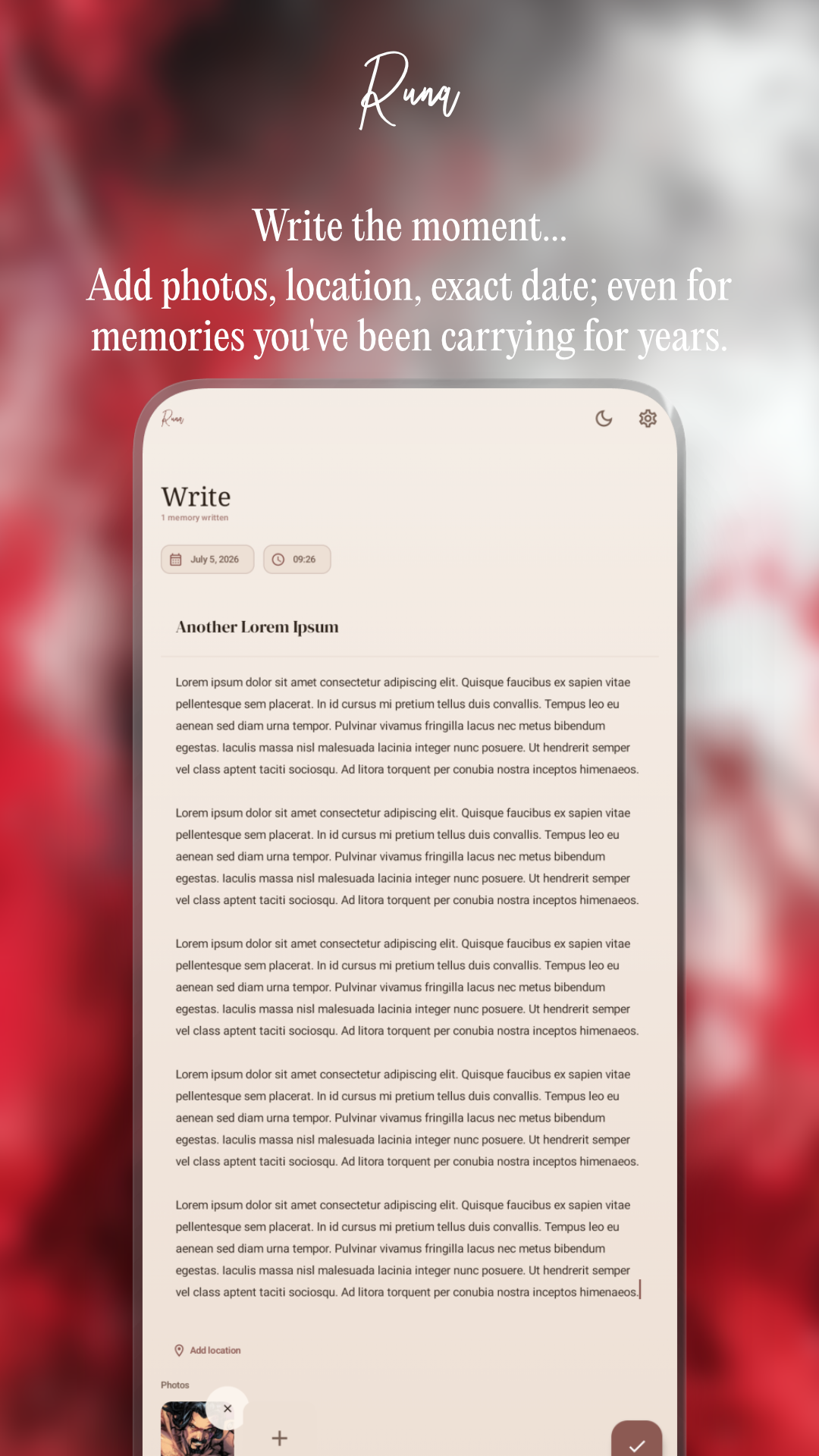
- Write entries with photos, location, and an exact date and time; even for memories you’re backfilling years later
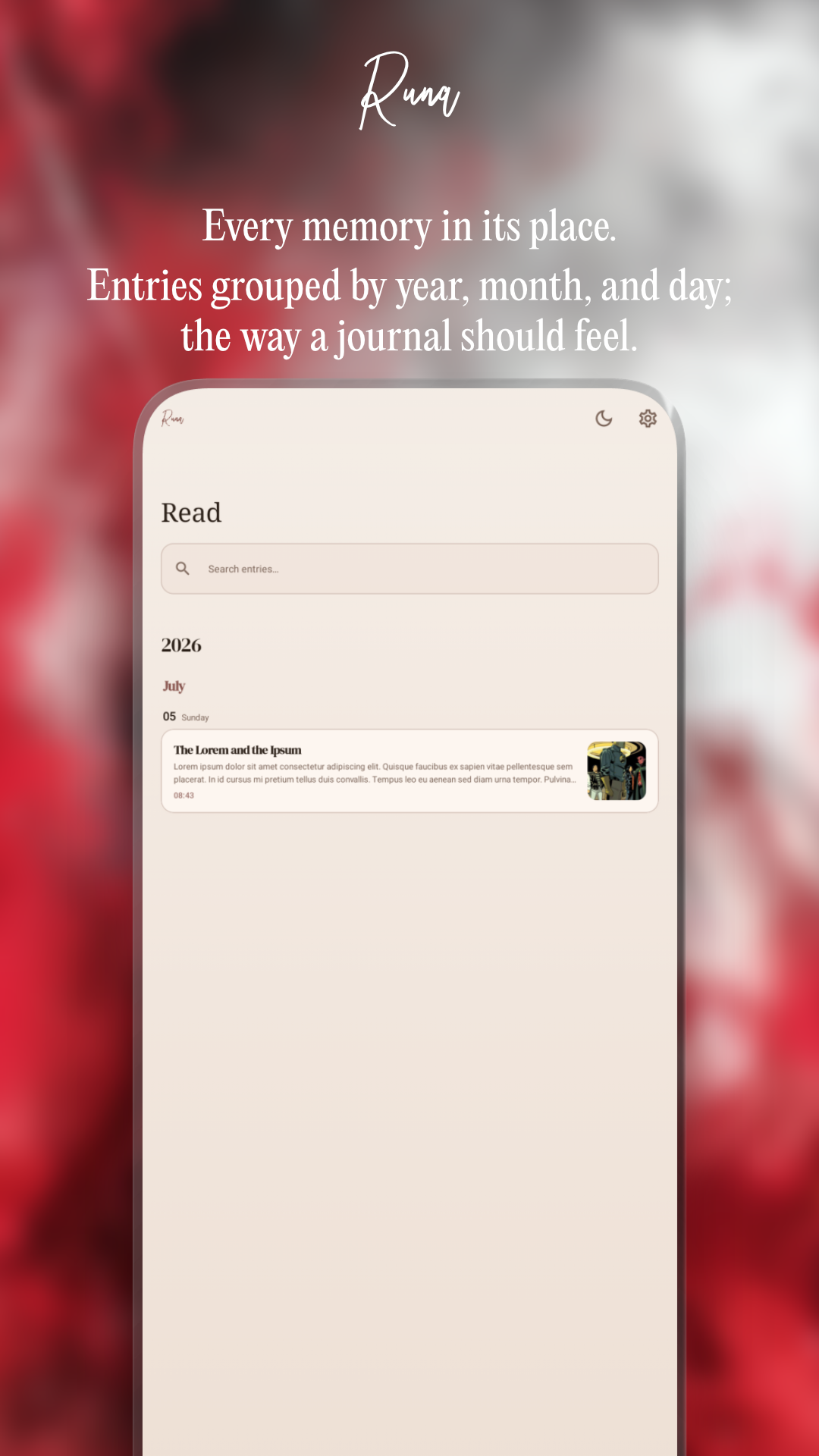
- Read view groups everything by year, month, and day, the way flipping through a physical journal feels
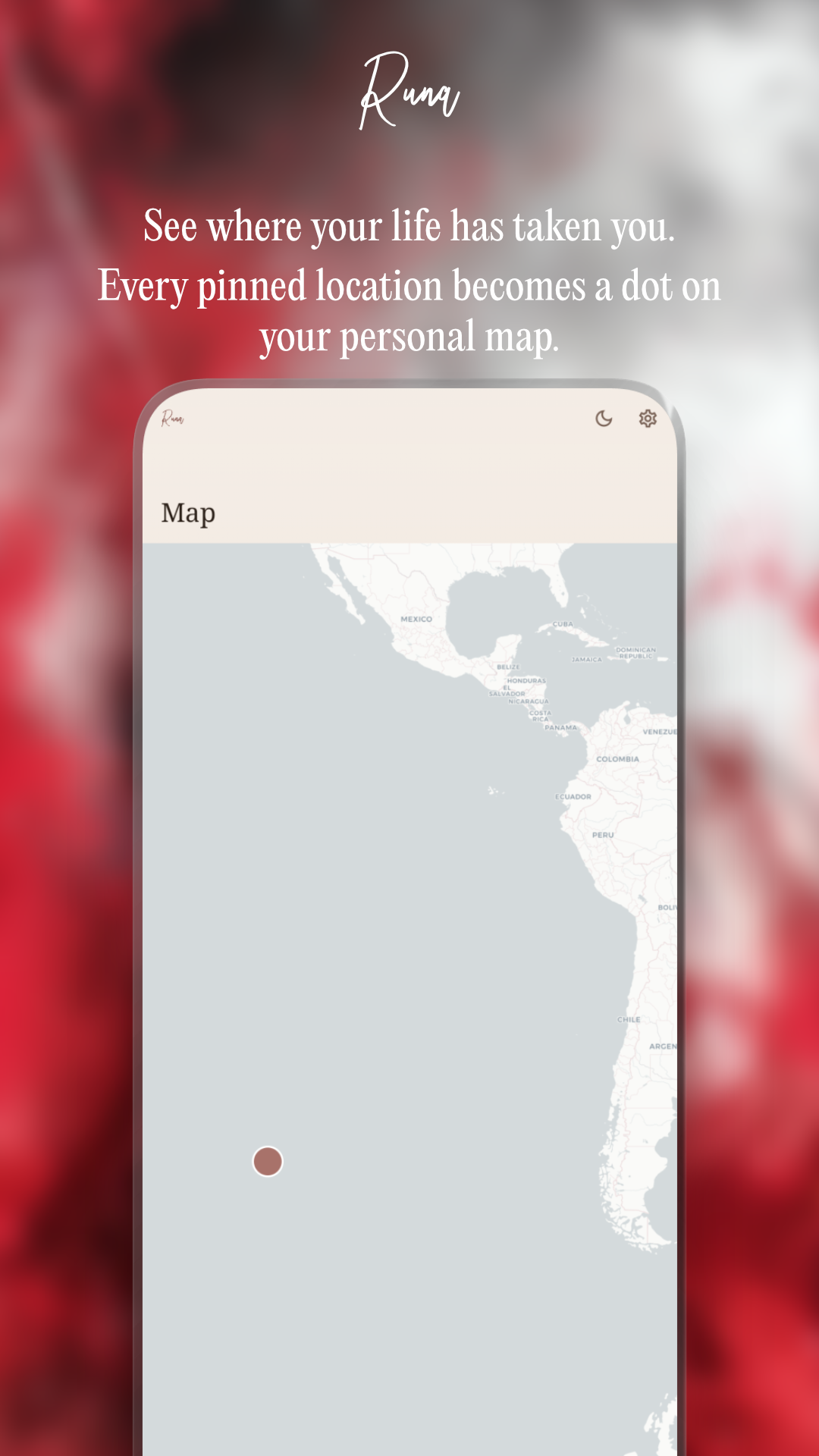
- Map view turns every location you’ve pinned into a dot, so you can see where your life has taken you
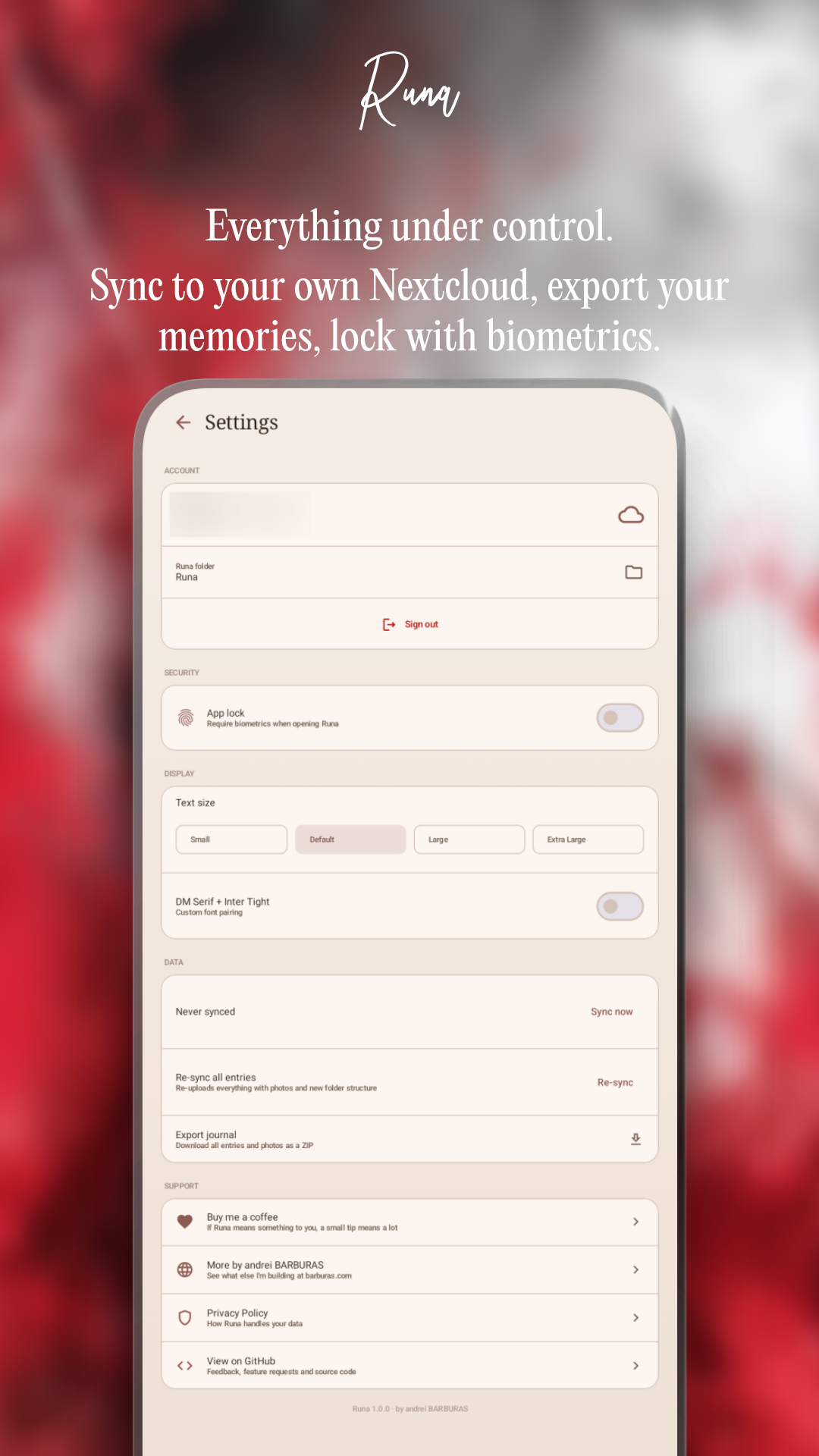
- Biometric app lock
- Full ZIP export of all entries and photos, whenever you want
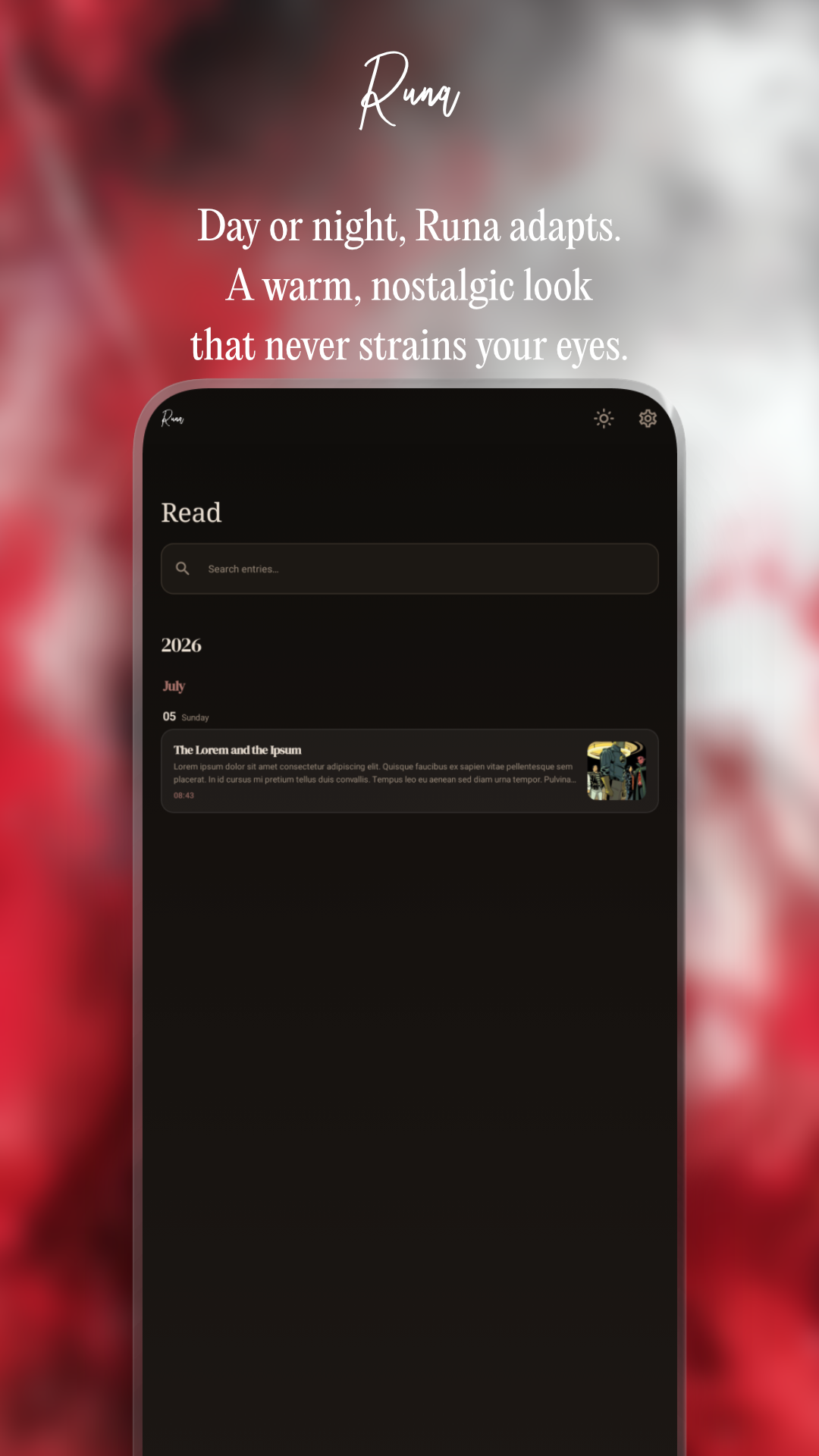
- A warm, nostalgic look in both light and dark mode
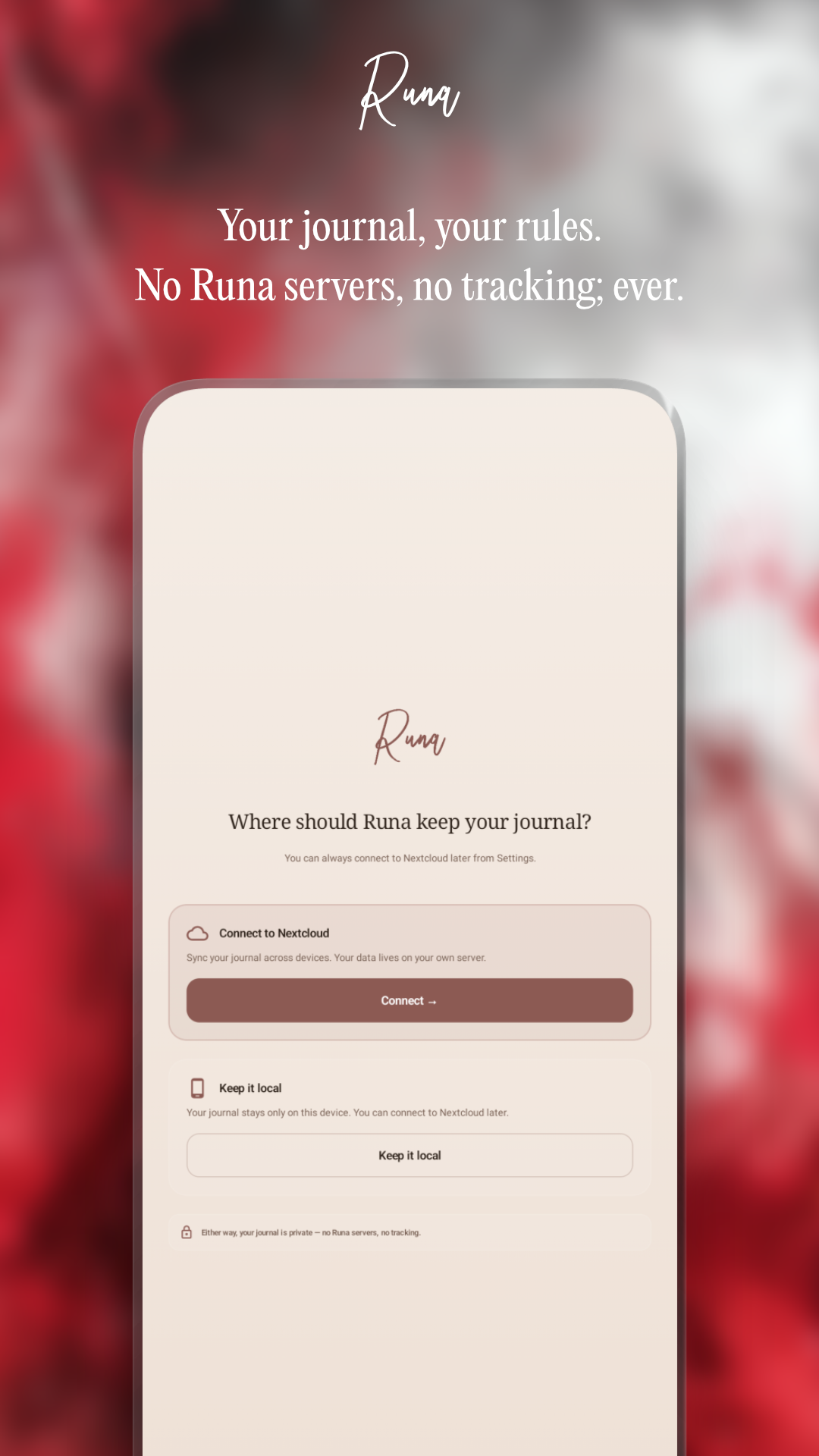
Your journal, your rules
Runa works fully offline, no account required. If you want your entries synced across devices, you can connect it to your own Nextcloud server via WebDAV; your data stays on your infrastructure, not mine. There are no Runa servers, no analytics, no tracking. Ever.
Built with AI, openly
Like all my apps, Runa was built with AI assistance. I don’t hide that. The ideas, the decisions, the direction; those are mine. The AI helps me build faster than I could alone. I think that’s worth being upfront about.
Part of a larger suite
Runa is part of a growing collection of Android apps I’m building for the self-hosted community. Vinci (personal CRM), Nóta (notes), Merk (bookmarks), Qarib (a “want to visit” places) and Blik (screenshots) are already live on the Play Store. They all share the same design language and the same principles: free, open source, privacy-respecting, and built for people who run their own infrastructure.
The source code is on GitHub, the app is free, and donations are always appreciated.